Ovarian cancer is a cancer that starts in the ovaries, fallopian tubes or the lining of the abdominal cavity (peritoneum). It can occur at any age but is more common in women over 50, and the risk of being diagnosed by age 85 is around 1 in 80–85. Because the ovaries sit deep within the pelvis, early changes are easy to miss and there is currently no simple population screening test.
Each year, around 1,900 people in Australia are diagnosed with ovarian cancer, making it one of the less common but more deadly gynaecological cancers. Awareness of symptoms and knowing what is normal for your body are powerful tools that can support earlier investigation and treatment.
Common symptoms of ovarian cancer
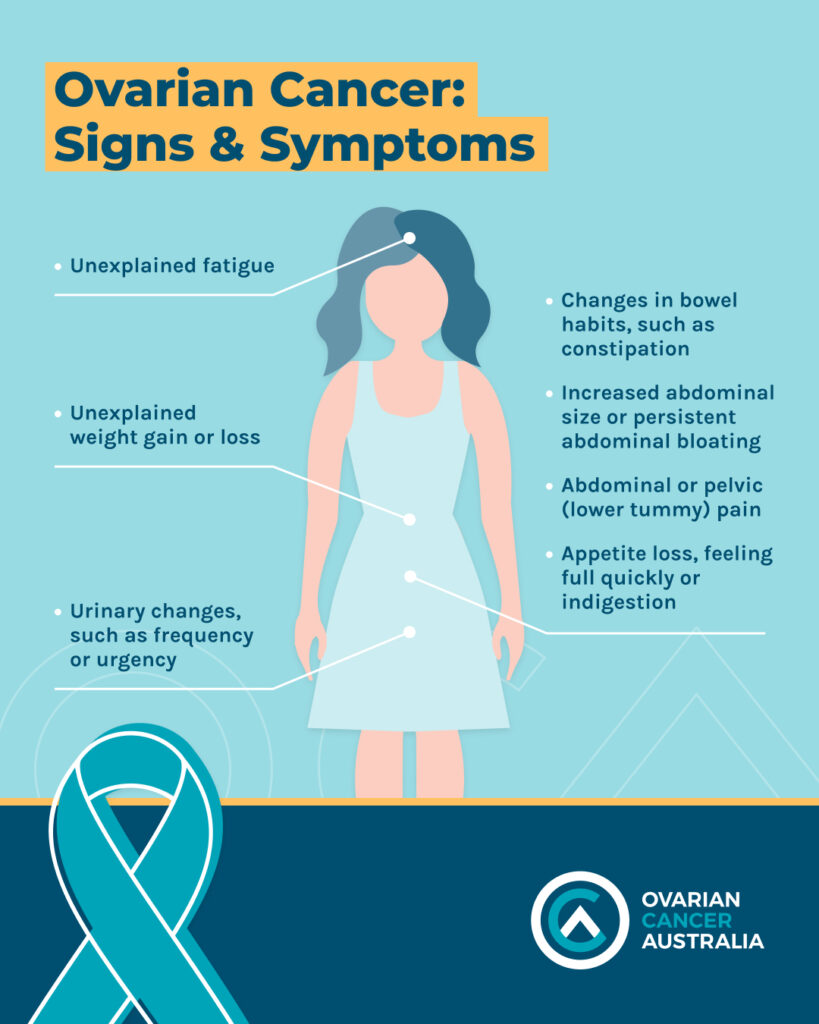
The symptoms of ovarian cancer are often subtle and can be mistaken for digestive issues, urinary problems or hormonal changes. The key is persistence and frequency: symptoms that are new for you, that occur frequently, or that don’t go away should be checked by your GP.
The most commonly reported symptoms include:
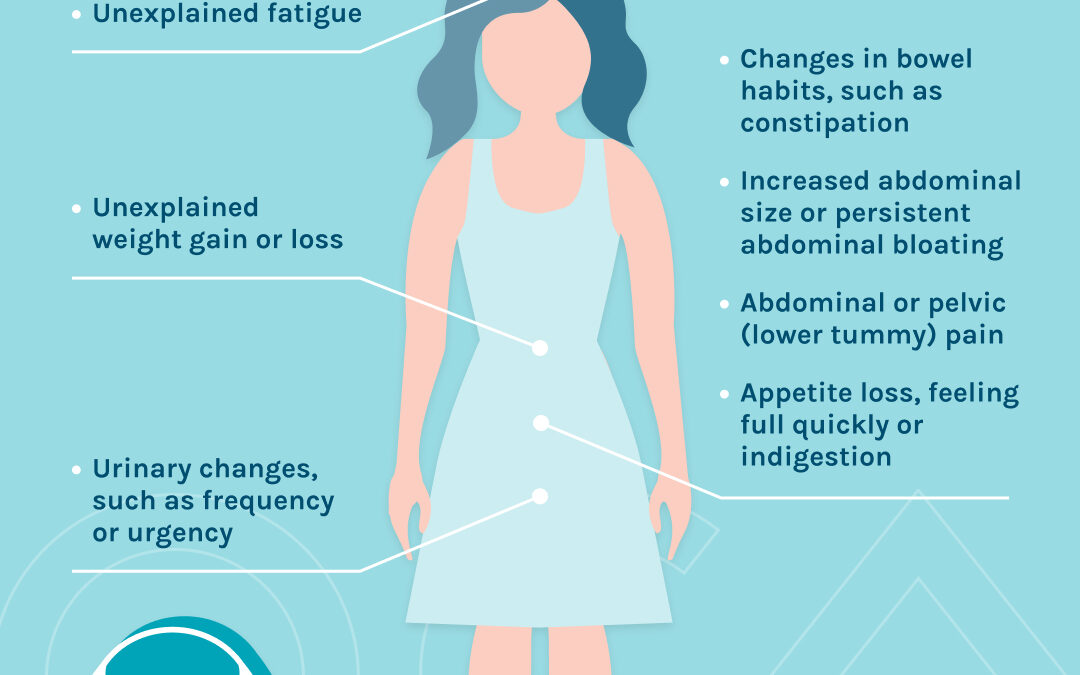
- Increased abdominal size or persistent bloating
- Abdominal or pelvic (lower tummy) pain or pressure
- Feeling full quickly or loss of appetite, even after small meals
- Needing to urinate more often or urgently
Additional symptoms can include:
- Changes in bowel habits (constipation, diarrhoea, increased wind)
- Unexplained weight gain or loss
- Ongoing tiredness or fatigue
- Lower back pain
- Indigestion, nausea or general “off” digestive symptoms
- Pain during sex
- Vaginal bleeding between periods, after sex or after menopause
Many of these symptoms can be caused by conditions other than cancer, such as irritable bowel syndrome or hormonal changes, but if they are new, persistent or worsening, it is important not to ignore them.
When to see your doctor
If you notice any of these symptoms and they are happening more than 12 times in a month, lasting longer than 2–3 weeks, or are not usual for you, make an appointment with your doctor. Keeping a symptom diary – noting what you feel, how often and how long it lasts – can help your doctor decide which tests are needed.
Your GP may examine your abdomen and pelvis and arrange investigations such as blood tests and imaging. Sometimes, referral to a gynaecologist or gynaecological oncologist is recommended for further assessment.

Why ovarian cancer awareness is so important
Ovarian cancer is sometimes called a “silent” disease because early symptoms can be vague and easy to dismiss, which means many people are diagnosed at a later stage. Later-stage diagnosis is linked with lower survival rates, while recognising symptoms early and seeking prompt medical advice can improve outcomes.
Awareness matters because:
- It helps women recognise that persistent bloating, pelvic pain or feeling full quickly are not just “normal” ageing or hormonal changes.
- It encourages timely GP visits and follow‑up, rather than “watching and waiting” for months.
- It supports friends, family and health professionals to have informed conversations about symptoms and risk.
- It reduces stigma and fear around gynaecological symptoms, making it easier to speak up.
Ongoing awareness campaigns in Australia aim to ensure that more women can name at least one symptom of ovarian cancer and feel confident advocating for their health.
How you can support your ovarian health
There is no guaranteed way to prevent ovarian cancer, but staying aware of your body and seeking help when something doesn’t feel right is a proactive step. You can:
- Notice patterns: pay attention to persistent changes in bloating, pain, appetite and toilet habits.
- Book regular health checks: discuss any family history of breast, ovarian or related cancers with your GP.
- Advocate for yourself: if symptoms continue and you feel unheard, ask for a review, further tests or a second opinion.
- Share information: talk about ovarian cancer symptoms with friends, family and community groups so more women know what to look for.
If you are worried about symptoms or risk, reach out to your GP or a trusted health professional to explore your options and next steps.
More information and support can be found at the Ovarian Cancer Australia website.